

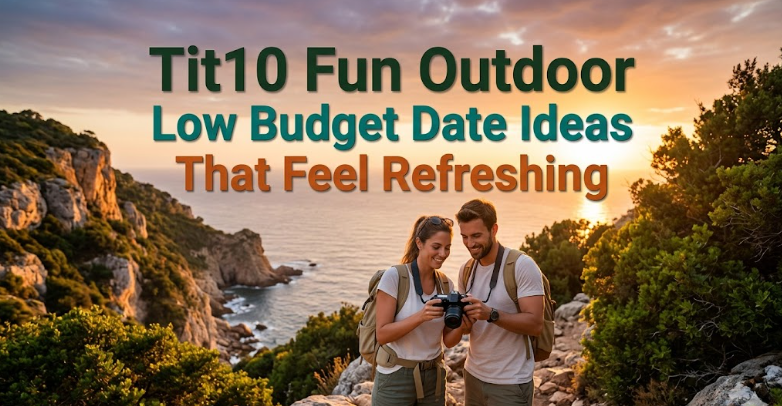
There’s something quietly magical about being outdoors with someone you care about. No loud music, no forced conversation, no pressure to impress with expensive plans—just fresh air, shared moments, and the kind of laughter that feels unplanned. A great date doesn’t need a big budget. In fact, sometimes the simplest settings create the most meaningful connections.
This piece explores ten low-budget outdoor date ideas that don’t just pass the time—they refresh the mind, deepen connection, and leave you with memories that feel a little more alive than the usual dinner-and-a-movie routine. Along the way, you’ll also find small interactive touches, prompts, and reflections you can actually use, making the experience more than just an idea—it becomes something you can step into.
- a sunrise or sunset walk with intentional pauses
There’s a difference between walking and actually noticing where you are. A sunrise or sunset adds a natural rhythm to your date—colors shifting, shadows stretching, the world slowing down.
Instead of rushing, try this:
Pause every 10 minutes and take turns answering a question:
– What’s something small that made you happy this week?
– What’s a place you’ve always wanted to visit?
– What’s one thing people misunderstand about you?
These gentle check-ins turn a simple walk into a layered experience. The sky changes, and so does the conversation. It’s quiet, reflective, and surprisingly intimate.
Mini activity:
At the end of the walk, each of you describes the sky in one word. Compare answers—you’ll often find they reflect your mood more than the actual colors.
- a DIY picnic with a theme
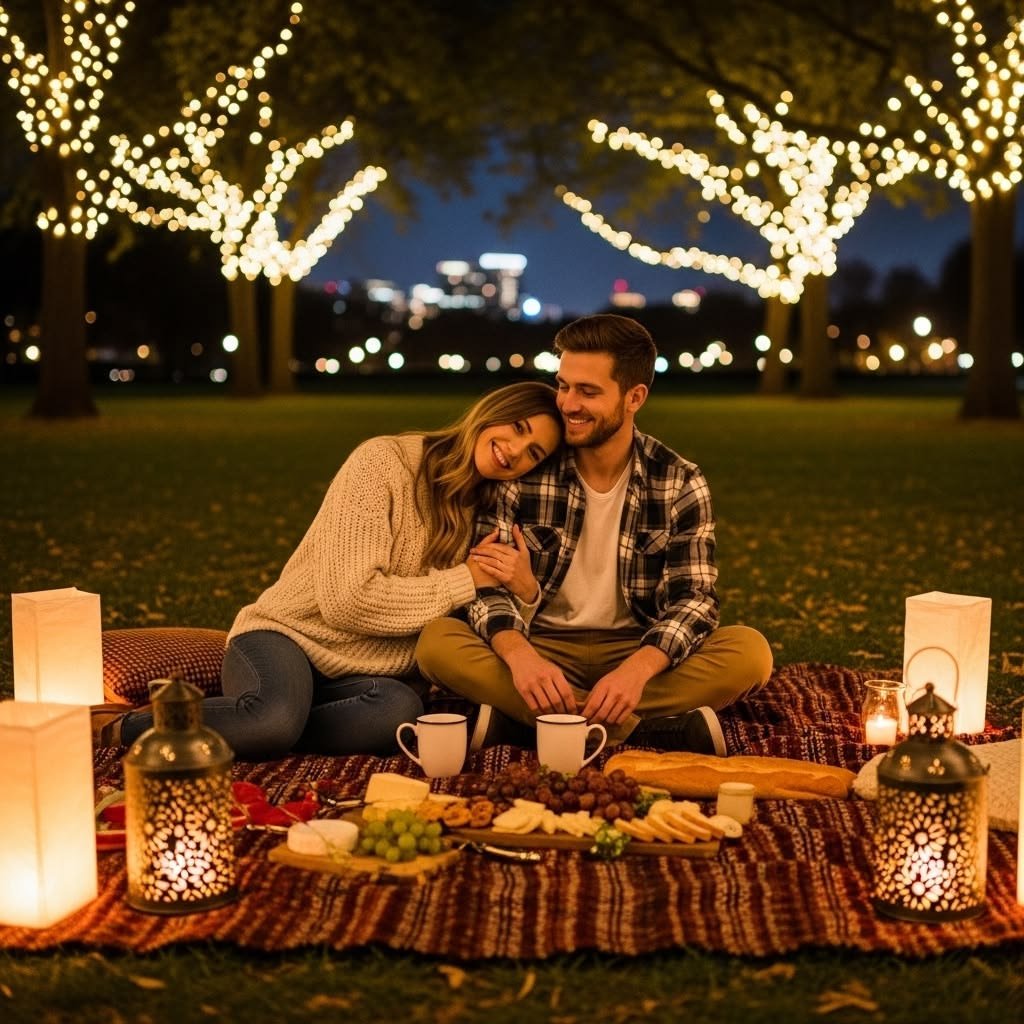
A picnic doesn’t have to be elaborate. In fact, the charm is in how simple it is. But adding a theme gives it personality.
Ideas:
– “Childhood favorites” picnic (snacks you loved as kids)
– “All under one color” picnic (everything must be red, green, etc.)
– “Street food remix” picnic (homemade versions of local favorites)
Bring a small blanket, a deck of cards, or even just a shared playlist.
Interactive twist:
Write down three questions each before the date. Fold them and exchange. During the picnic, pick one at random every 15 minutes.
It creates a rhythm: eat, talk, laugh, repeat.

- stargazing with storytelling
You don’t need a telescope to enjoy the night sky. Just a quiet spot, minimal lights, and a little patience.
Instead of trying to identify constellations, make your own.
Try this:
Pick a cluster of stars and invent a story about it together. Maybe it’s a lost traveler, a dancing animal, or something completely absurd.
Then switch roles—one person starts a story, the other continues.
Why it works:
Storytelling lowers pressure. You’re not trying to be impressive—you’re just playing. And play is often where connection grows fastest.
- a casual cycling adventure
If you both have access to bikes, a casual ride can feel freeing. No destination needed.
Create a simple rule:
Every time you reach a crossroads, flip a coin or let one person choose the direction.
It turns the ride into a mini adventure.
Optional challenge:
Stop at three random places along the way and rate them:
– Best view
– Most peaceful
– Most unexpected
By the end, you’ve created your own map of shared moments.
- a photography walk with a twist
You don’t need professional cameras—phones work perfectly.
Set categories before you start:
– Something that represents “calm”
– Something that feels “chaotic”
– Something that reminds you of the other person
Walk around and take photos matching each category.
At the end, sit somewhere and share your photos. The explanations are often more meaningful than the images themselves.
Bonus idea:
Pick one photo each and send it to each other later with a short caption. It becomes a small digital memory you can revisit.
- visiting a local park with mini challenges
Parks are underrated. Open space, greenery, and room to just exist without pressure.
Turn it into a playful experience:
Challenge ideas:
– Who can spot the most different bird types?
– Create a short “nature scavenger hunt” (a yellow flower, a smooth stone, something shaped like a heart)
– Build something small using only natural materials
These aren’t about winning. They’re about engaging with your surroundings—and each other—in a light, relaxed way.
Reflection moment:
Sit quietly for two minutes and just observe. Afterwards, share what you noticed. It’s surprising how differently two people can experience the same place.
- street food hopping on a budget
Instead of one big meal, try small bites from different vendors.
Set a budget limit beforehand. This makes it fun rather than restrictive.
For example:
– One drink
– One savory item
– One sweet item
Walk between stops, talk, and rate each item together.
Make it interactive:
Create a simple scoring system:
Taste: /10
Value: /10
Would you get it again? yes/no
At the end, declare a “winner.” It adds a playful structure without making things serious.
- outdoor sketching or doodling session
You don’t have to be good at drawing. That’s the point.
Bring paper and pens. Sit somewhere comfortable and try:
– Drawing the same object without looking at the paper
– Drawing each other in 60 seconds
– Drawing something that represents your mood
The results will likely be messy, funny, and completely imperfect.
That’s where the magic is.
Conversation prompt:
Ask each other, “What does your drawing say about you right now?”
It turns a simple activity into something unexpectedly thoughtful.
- a “memory lane” walk
If you’ve known each other for a while, revisit places that hold meaning. If not, create new ones.
Walk through an area and assign meaning as you go:
– “This is where we had our most random conversation.”
– “This is where we laughed for no reason.”
Even if it’s your first time there, you’re building shared memory in real time.
Mini ritual:
At the end of the walk, pick one spot and say, “Let’s remember this place.” Take a photo or just pause for a moment.
It sounds small, but it anchors the experience.
- a simple outdoor game day
Games don’t need to be competitive to be fun.
Ideas:
– Badminton or frisbee
– Simple card games on a bench
– Even childhood games like tag or hide-and-seek in a safe area
The goal isn’t skill—it’s energy.
Add a twist:
Loser of each round has to answer a fun or slightly embarrassing question.
Examples:
– What’s your most useless talent?
– What’s a song you secretly love?
It keeps the mood light and keeps conversation flowing naturally.
bringing it all together
What makes these dates refreshing isn’t just the fresh air. It’s the shift away from performance. You’re not trying to impress with money or grand gestures. You’re showing up, being present, and letting the moment unfold.
There’s a quiet confidence in that.
And often, those are the moments that stay with you—the shared laugh over a badly drawn sketch, the silence during a sunset, the random street food that somehow tasted amazing.
small checklist you can actually use
Before your next outdoor date, keep this simple list in mind:
– Pick one idea, not five
– Keep the plan flexible
– Bring one small interactive element (questions, game, or challenge)
– Stay present—phones away when possible
– End with a moment of reflection
It doesn’t need to be perfect. It just needs to feel real.
frequently asked questions
- what if the other person doesn’t like outdoor activities?
Start small. Choose something gentle like a picnic or a short walk. The goal isn’t to force an activity but to create a comfortable environment. You can also combine it with something they already enjoy, like music or food. - how do I avoid awkward silence during these dates?
Silence isn’t always a bad thing. But if you want to keep things flowing, bring simple prompts or activities—like the question exchange or mini challenges. They naturally create conversation without forcing it. - what should I bring for a low-budget outdoor date?
Keep it minimal: water, a small snack, maybe a blanket, and one activity item (cards, notebook, or a ball). Overpacking can make things feel complicated. - are these ideas suitable for first dates?
Yes, especially ones like a casual walk, street food hopping, or a park visit. They’re low-pressure and allow for natural interaction. Just choose a public and comfortable setting. - how can I make the date feel special without spending money?
Focus on intention. A small thoughtful touch—like writing a question list, choosing a meaningful spot, or planning a simple activity—can make a big difference. Effort often matters more than expense. - what if the weather doesn’t cooperate?
Have a flexible mindset. You can adapt—move to a covered area, shorten the plan, or even embrace it (a light drizzle can make a walk feel more memorable). If needed, reschedule without stress.
In the end, a good date isn’t about how much you spend. It’s about how you show up. When you strip things down to simple moments—walking, talking, laughing, noticing—you create space for something genuine to grow. And that, more than anything else, is what makes it unforgettable.